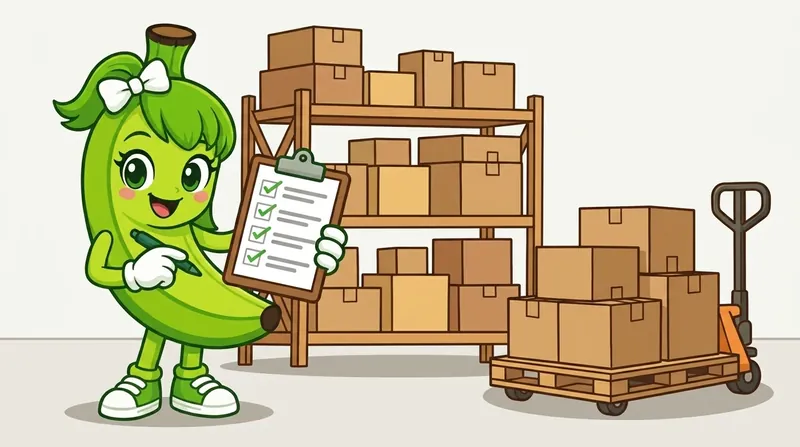

A useful wholesale supplier list is one where every name has passed a clear checklist: a real business, workable minimum orders, a genuine fit for Amazon resale and a clean red-flag screen.
Most lists do not show that work. Here is the checklist we use, so you can run it yourself on any supplier, from any list, including ours.
Key takeaways
- A supplier list is worth using only if you can see why each name is on it. Without that, it is a phone book.
- Verify any US wholesaler yourself through the state business registry, and expect them to ask for your resale certificate before they open an account.
- Payment by Zelle, Venmo, crypto or a wire to a personal account is an automatic walk-away. So is a brand-name price far below every distributor price list you have seen.
- Work a price list in bulk first, then hand-check the survivors against the Keepa chart, days of cover and a profit calculator with real fees.
- Wholesalers with low minimums suit newer sellers and FBM. Distributors, manufacturers and liquidators fit later stages or flips.
What makes a wholesale supplier list worth using?
Most wholesale supplier lists are directory dumps: hundreds of names and no evidence that anyone checked them. You can burn a week emailing entries that turn out to be retail middlemen, closed companies or brokers reselling the same list you just downloaded.
A list that hands you the same ASINs every other seller has already scanned is not an edge. By the time a product shows on everyone’s sourcing list, the buy box is split many ways and the margin is thin before your shipment lands.
What does “vetted” actually mean?
Vetted means the list shows its work: the checks used to approve each supplier, the red flags that got others excluded and basics you can verify yourself, such as a current business registration. Anything less is a phone book. Once you have a supplier, see how to stop chasing sales rank and watch inventory for what to check on the product side.
What is the three-stage vetting checklist?
Run the same three stages on every supplier before you spend a dollar. The order matters: legitimacy first, fit second, red flags as a final screen.
Legitimacy
Confirm the business entity exists in state registration records, with a real US address and a phone number that gets answered. Check how long the company has been operating. A supplier that has filled wholesale orders for years looks different from a reseller with a landing page and a free email address. Ask for standard wholesale paperwork: a request for your resale certificate, a W-9 and itemized invoices you could show to Amazon if it asks for supply chain documents.
Minimum order and resale fit
A supplier is useless to a solo operator if the minimum order uses up the whole budget. Record the real minimum order, whether mixed products count toward it and whether the catalog suits FBA wholesale or only bulk liquidation lots. If days of cover on their core ASINs runs long and the minimum forces a 90-day buy, that is a flag.
Red-flag screen
Treat certain signals as automatic disqualifiers, not as deductions. If a supplier trips even one, drop them.
Which red flags mean walk away?
The fastest way to lose money in wholesale is not to pick the wrong ASIN. It is to send a deposit to a supplier who never ships. These signals are disqualifiers on their own:
Disqualifiers
- They ask for payment by Zelle, Venmo, crypto, gift cards or a wire to a personal account. Legitimate distributors invoice through a business entity.
- Brand-name prices run far below any distributor price list you have seen. Genuine branded stock is not sold at a fraction of wholesale. Common causes are grey market stock, refurbished units sold as new, or a scam.
- They refuse to give a physical address or to take a phone call.
- Their website is a thin copy of another distributor’s site with a swapped logo.
- They claim authorization from a brand but cannot show an approval letter.
How do you verify a US wholesaler before sending a purchase order?
Start with the state. Search the Secretary of State’s business registry in the supplier’s home state and confirm the entity is active, in good standing and not a shell formed last month. A real distributor has a physical warehouse address and a business phone that answers.
Then check the resale paperwork. Wholesale pricing applies when you buy for resale, so most legitimate suppliers ask for your resale certificate before they open an account. Sales tax rules for resale are set by each state, so check your own state’s department of revenue for how the certificate works. If a supposed wholesaler never asks for yours, that is a signal they are not selling wholesale.
How do references and invoices help?
Ask for two references from other sellers who buy at wholesale, and ask what terms they got: net 15, net 30 or prepay. A distributor with real volume usually sells on terms. A middleman reselling someone else’s price list often wants your money up front.
Request a sample invoice with a real brand name, quantity and unit cost. Ask where the stock comes from, and whether they can document it. Then compare their quote with the Keepa price history for those ASINs: is their “wholesale” price even below the current buy box? No directory entry replaces these checks, and we would rather say so than pretend otherwise.
What types of suppliers are on a wholesale supplier list, and when does each fit?
Not every entry fits your stage, budget or account health. The four main types differ like this:
Wholesaler
Typically low to mid minimums. Best for newer sellers, FBM and testing ASINs. Many ask for a resale certificate.
Distributor
Mid to high minimums. Best for established FBA sellers who are scaling winners. Expect longer onboarding and sometimes a credit application.
Manufacturer (direct)
High minimums. Best for sellers with proven sales on a few ASINs. Often the slowest to approve and the least flexible.
Liquidator
Low minimums, per lot. Fits flips, clearance and bulk deals. Manifest accuracy varies and return risk is higher, so inspect every manifest.
Wholesalers are the usual starting point: low minimums, broad catalogs and price lists you can work through with a profit calculator. Distributors make sense once you reorder the same ASINs and want better pricing at volume.
How do you work a supplier price list without killing your margin?
A price list is a filter, not a shopping cart. Work it in bulk first, then hand-check the survivors. Buying straight off the list at face value is how ROI dies.
Check each shortlisted ASIN
Days of cover
Compare the stock across all offers with how fast the product sells. If total seller stock far exceeds sales, you are buying into a price war.
The Keepa chart
A recent price drop plus a rising seller count is a pass, whatever the margin says.
Profit with real inputs
Use your buy cost from the list, FBA fees, inbound shipping and storage. Set a minimum ROI and stick to it. A 15% ROI on a slow mover is not a deal. Skip anything where the math only works if the price holds.
Which sourcing tools pair with a supplier list?
A vetted list and a sourcing tool do different jobs. The list tells you who is legitimate. Tools scan price lists and estimate ROI and profit per unit. The Keepa chart sits underneath all of it, because a deal on a flat or falling chart is not a deal.
Hold software to the same standard as suppliers: published criteria, claims you can verify and no pressure to buy before you can test. The same warning signs apply to a distributor demanding a wire transfer and a tool promising guaranteed winners.
Where does RipeBanana fit, and where does it fall short?
RipeBanana lets you upload a supplier list and scores each product on marketplace stock, sales pace and ROI, so you can see which lines are worth a closer look. The Vendor Directory is a small curated set of companies we have bought from over many years, with filters for supplier type and services. It is a starting point, not a certificate of approval, and a new name still gets the same checks.
Where it falls short: it is not a verification service, and it does not replace the registry and reference checks above. Its figures are estimates, so confirm the final numbers on the Keepa chart and with your own fee check before you buy. We explain why research tools miss developing products in why research tools miss tomorrow’s opportunities.
What is the best wholesale supplier list for beginners on a low budget?
Start with wholesalers rather than distributors or manufacturers. Their minimums are lower and their catalogs are broad enough to test a few ASINs without tying up your budget. Choose a list that explains why each name is on it, and run the checklist yourself before you send any money.
Do you need a resale certificate to buy from a US wholesaler?
In practice, yes. Most legitimate suppliers ask for one before they open an account, because wholesale pricing is for resale. Rules differ by state, so check with your state’s department of revenue. If a supposed wholesaler never asks, treat that as a signal that they are not selling wholesale.
Are paid supplier lists worth the money?
It depends on whether the list shows its work. Resold PDFs passed around in chat groups give every buyer the same entries, so the margin is gone before your shipment lands. A list is worth paying for when it documents what each supplier passed and what got others excluded. An unexplained dump is a phone book.
How many ASINs should you check on a supplier price list?
Scan the whole list in bulk first, then hand-check the survivors. There is no fixed number, but do not buy off a single line. For each shortlisted ASIN, review the Keepa chart, days of cover, competition and ROI after fees.
Can you use a wholesale supplier list for FBM and online arbitrage too?
Yes. Wholesalers with low minimums suit FBM sellers testing ASINs without FBA storage fees, and liquidator lots can work for flips if you inspect the manifest carefully. The same checks apply either way: verify the entity, expect a resale certificate request and run every price through a profit calculator with your real cost and fees.